development of art
What is art, how has it evolved over the centuries, and how has its purpose in people’s lives changed?
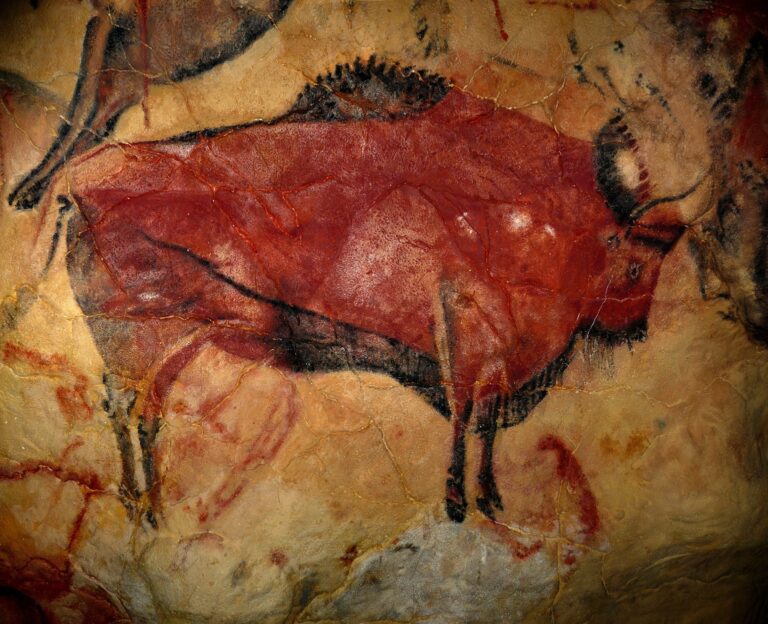
Art is a very broad cultural concept—and one that is constantly evolving. It encompasses numerous fields such as painting, literature, music, film, and sculpture; practiced in various forms by all human cultures, it can be considered one of the defining characteristics of the human species. There is no consensus regarding the definition of art, although most definitions emphasize aesthetics. However, in attempting to define the concept, we can state that art signifies creative human activity. The definition of art has varied slightly across different eras, reflecting the prevailing needs of the time. Initially, art was defined in terms of strict rules and adherence to them—a concept closer to the craftsmanship practiced in that period. This definition would also encompass the decoration of functional objects, such as tools or weapons, and acknowledge the likelihood that many early artworks held ritual or religious significance. It is impossible to determine whether any prehistoric artwork was created solely for aesthetic appreciation, although that element undoubtedly played a role for both the creator and the viewer.
we identify art works in a formal sense because we find them aesthetically pleasing and we find that they enhance our perception of the world around us through the apt use of images
Robert Layton
The oldest known decorative object comes from the German town of Bilzingsleben and dates back 300,000 years; it is a bone fragment bearing traces of parallel incisions. Only slightly more recent is a piece of volcanic rock from Israel that resembles later Venus figurines. The first complex ornaments appeared during the Middle Paleolithic. Between 100,000 and 50,000 years ago, the first musical instruments were invented—simple pipes and flutes capable of producing a few notes.
Prehistoric art reached a high level of sophistication 40,000 years ago with the emergence of paintings and sculptures that attest to the great skill of ancient artists. While the paintings in the Lascaux cave are the most famous examples from this era, one should also be familiar with those found in caves such as Altamira, Niaux (near the village of Niaux in southern France, featuring black and red rock paintings of animals like ibexes and bison), Montespan (e.g., an image of a horse traced with fingers), and Saint-Germain-en-Laye. The Chauvet cave in France revealed the oldest works of this kind (dating back 35,000 years), depicting subjects such as cave lions. Animals are the dominant subject of prehistoric paintings; human figures appear rarely and are depicted in a more schematic manner. There are numerous abstract signs whose meanings remain uncertain—one hypothesis suggests that some of these signs represent calendars tracking animal reproductive cycles, though this cannot be confirmed.
There is an ongoing debate regarding the purpose these animal depictions served. While some may have been purely decorative, it is reasonable to assume that the paintings had a ritual function. They are often found in hard-to-reach areas of caves where they cannot be fully viewed; sometimes they appear in locations devoid of other traces of human presence, suggesting these were sacred sites deliberately kept uninhabited. In many instances, new drawings were created over earlier paintings, thereby destroying the original decorative effect. The most widely accepted theory holds that the act of drawing animals was part of a ritual intended to ensure success in the hunt. Beyond their ritual and religious purposes, it is also likely that these paintings served to educate younger generations by showing them what specific animals looked like, or functioned as a means of communicating information to others.
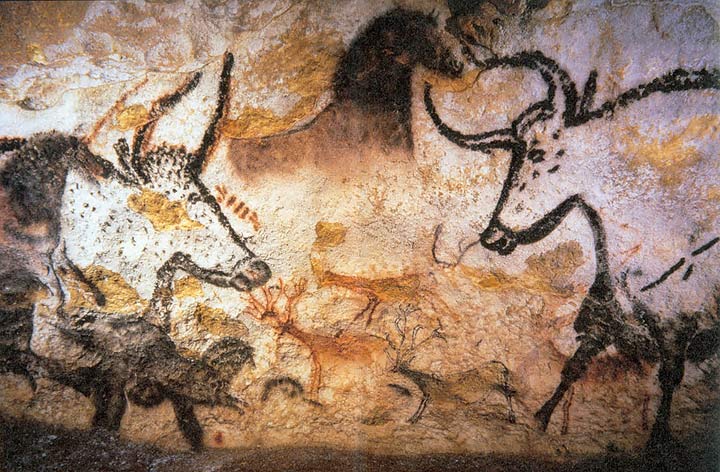
A painting of aurochs, horses, and deer from the Lascaux cave in France. The paintings are estimated to be between 17,000 and 22,000 years old. Most of the major images have been painted onto the walls using red, yellow, and black colours from a complex multiplicity of mineral pigments including iron compounds such as iron oxide, hematite, and goethite, as well as manganese-containing pigments.
As civilization evolved, art became increasingly intertwined with power, religion, and order. In the ancient world, it often served both deities and rulers. Its purpose was to reinforce the authority of prominent figures, preserve their memory, and shape the nature of their veneration. Monumental structures, sculptures, wall paintings, and decorative objects reflected the ideals of the culture that created them. During that era, art generally did not focus on individual expression in the modern sense of the term; rather, it fulfilled public functions: uniting, educating, and celebrating. It also shaped ideals of balance, harmony, and beauty.
In later eras, art increasingly served as a tool for religious instruction and practice, particularly as religious traditions developed and spread across the globe. Whether taking the form of icons, paintings, illuminated manuscripts, stained glass, or monumental sacred structures, art directed people toward the realm of the sacred. For many, the creation of art was an outward expression of piety and an act of devotion to the divine. For those unable to read, it helped give tangible form to spiritual narratives—conveying meaning through a medium other than text—and shaped the atmosphere within the place of worship. Art also served to preserve cultural memory, passing on ancient values, historical figures, legends, and symbols to future generations.
The advent of the modern era brought about an even greater diversity in the forms and purposes of art. Influenced by evolving technologies, urban environments, industry, and philosophy, artists began to question established conventions regarding the appearance and function of art. Some creators turned to realism, depicting everyday life, while others began to use art to express their emotions and experiences. Art became a realm of exploration rather than merely a tradition inherited by artists; it could document reality, break conventions, and strive for beauty. In contemporary times, the primary aim of art has become the expression of the artist’s emotions and their presentation to the viewer for individual interpretation.